


Fostering Peace through Global Citizenship Podcasts
Below are selected Podcasts that help define and support your education in becoming a Peace Advocate by strengthening your role as a Global Citizen.
-
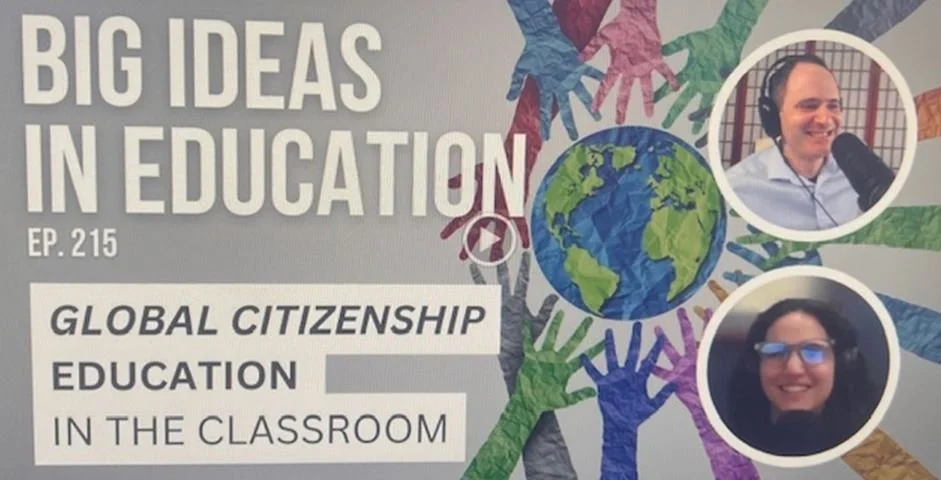
Key aspects of GCE highlighted in the video include:
Painting a Fuller Picture of History: This involves exploring untold stories, understanding the differing impacts of historical events like colonialism, and finding commonalities between seemingly disparate groups (1:32-1:53).
Developing Key Skills: GCE permeates through teaching critical thinking, conflict resolution, and intercultural understanding (1:57-2:03).
Preparing Students for Active Contribution: The goal is to prepare students to actively contribute to making the world better and to ignite curiosity, encourage empathy, and foster a sense of global community (2:05-2:20).
Integration, Not Addition: GCE should not be seen as just another subject to add to the curriculum, but rather as a way to overhaul the curriculum and integrate a global context across all subject areas (2:40-2:51, 4:14-4:27).
Practical Application: It helps answer the student's question, "When am I going to use this?" by inherently showing them how the material is relevant in a global context (4:32-5:03).
Implementation Challenges: While many schools include "global citizenship" in their mission statements, the real challenge lies in providing teachers with the resources and training to genuinely integrate GCE into lessons (6:46-7:31).
Beyond Travel: Global travel is neither a necessary nor sufficient condition for fostering global citizens; it's more about cultivating a state of mind and understanding one's place in the world (3:37-4:10).
Experiential Learning: GCE aligns with project-based learning, problem-based learning, and citizen science, encouraging students to engage in real-world problems and research outside the traditional classroom setting (8:25-8:56).
Title: Global Citizenship Education in the Classroom.
Click here to begin Length: 10.4 minutes
-
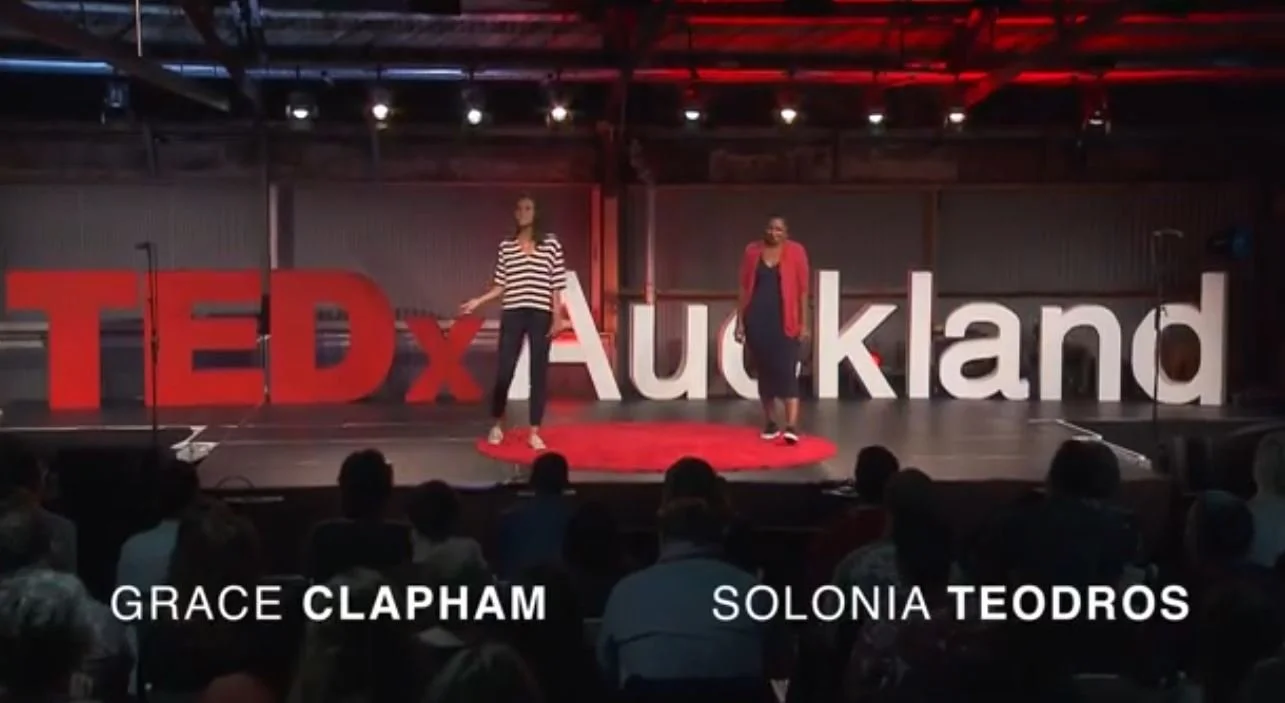
The speakers, Grace Clapham and Solonia Teodros, discuss the concept of global citizenship and its importance in today's interconnected yet often disconnected world (0:10). They trace the idea back to ancient Greek stoics and highlight its relevance in addressing current global issues like cultural conflict and the refugee crisis (1:00-1:15).
They emphasize that global citizenship is a mindset, not defined by passport or ancestry, but by a way of seeing and understanding the world, connecting people, ideas, and actions (1:46-2:03). They envision a future where individuals identify and act as citizens of the world, and leaders prioritize global interests (2:05-2:28).
Drawing from their own multicultural backgrounds, they share personal anecdotes about experiencing cultural differences and the importance of mutual tolerance, acceptance, and respect (2:30-5:26). They highlight how their experiences fostered a 3-dimensional worldview, adaptability, and an open mind (4:00-4:18).
The speakers introduce a four-stage pattern of evolving consciousness crucial for developing a global mindset (8:20):
Awareness: Building awareness through careful listening and observation, appreciating the beauty and flaws in ourselves and others (8:31-9:01).
Understanding: Going beyond awareness by asking questions, drawing insights, and cultivating empathy to see the world through another's lens (9:04-10:14).
Sensitivity: Developing sensitivity by practicing empathy, which leads to mindfulness in words, actions, and behaviors to prevent misunderstandings (10:24-11:10).
Intelligence: In a cultural context, this refers to the ability to work and relate effectively across different cultural contexts by adapting actions and interactions based on awareness, understanding, and sensitivity (11:14-11:27).
They conclude by stating that cultural competency is the key tool for global citizenship as it allows individuals to recognize their interconnectedness with the world (11:40-12:10) and invite the audience to embrace this identity (12:15-12:21).
Title: Stepping Up to Global Citizenship.
Click here to begin Length: 12:30 minutes
-
In this TEDxBMS talk, Tanja Schulze explores the concept of Global Citizenship, aiming to define it and identify the conditions necessary for its formation, while interweaving her personal experiences.
She begins by highlighting the widespread online references to "Global Citizen" (0:08) and then breaks down the individual terms:
Citizen (2:11): Traditionally refers to being a member of a country or community, implying an active role within that community.
Global (3:02): Refers to the Earth and a connection back to the place where we live.
Schulze then poses several questions to challenge common perceptions of a global citizen, such as someone who travels a lot, lives abroad, speaks many languages, or interacts with people from different countries (3:48). She also touches on the concept of "home" for a global citizen, suggesting it might differ from traditional notions (5:02).
According to Schulze, what a global citizen does involves:
Traveling to connect and gain insight (6:06) from other cultures.
Developing awareness (6:30) of our interconnectedness, leading to respect (6:45) for diverse ways of life and solidarity (7:16) with others.
A call for action (7:35) to make the world a better place, emphasizing responsibility (8:49).
Schulze reflects on her own journey to becoming internationally minded, attributing it not just to extensive travel (9:07) or formal education (12:39), but also to:
Early exposure through books about foreign countries and cultures (9:42).
Growing up in a rural setting contrasting with urban experiences (12:04).
Her parents' tolerant view (13:41) on her choices.
Experiences like intercultural training, though she emphasizes it's "a whole lot more" than just a certificate (13:56).
Ultimately, she concludes that becoming a global citizen is about exposure to other cultures and developing respect for others and one's surroundings (15:02). She shares a definition by Michael Byers: "Global Citizens are willing to think beyond boundaries of place, identity, category and recognize all human beings as their equals while respecting Humanity's inherent diversity within their own sphere of influence global citizens seek to imagine and work towards a better world" (15:53-16:14).
Her final conclusion is that global citizenship is primarily about a change in attitude (16:29) – fostering respect for people and the Earth to create a more equal, sustainable, and peaceful world (17:04).
Title: How does One Become a Global Citizen?
Click here to begin Length: 17:34 minutes
-
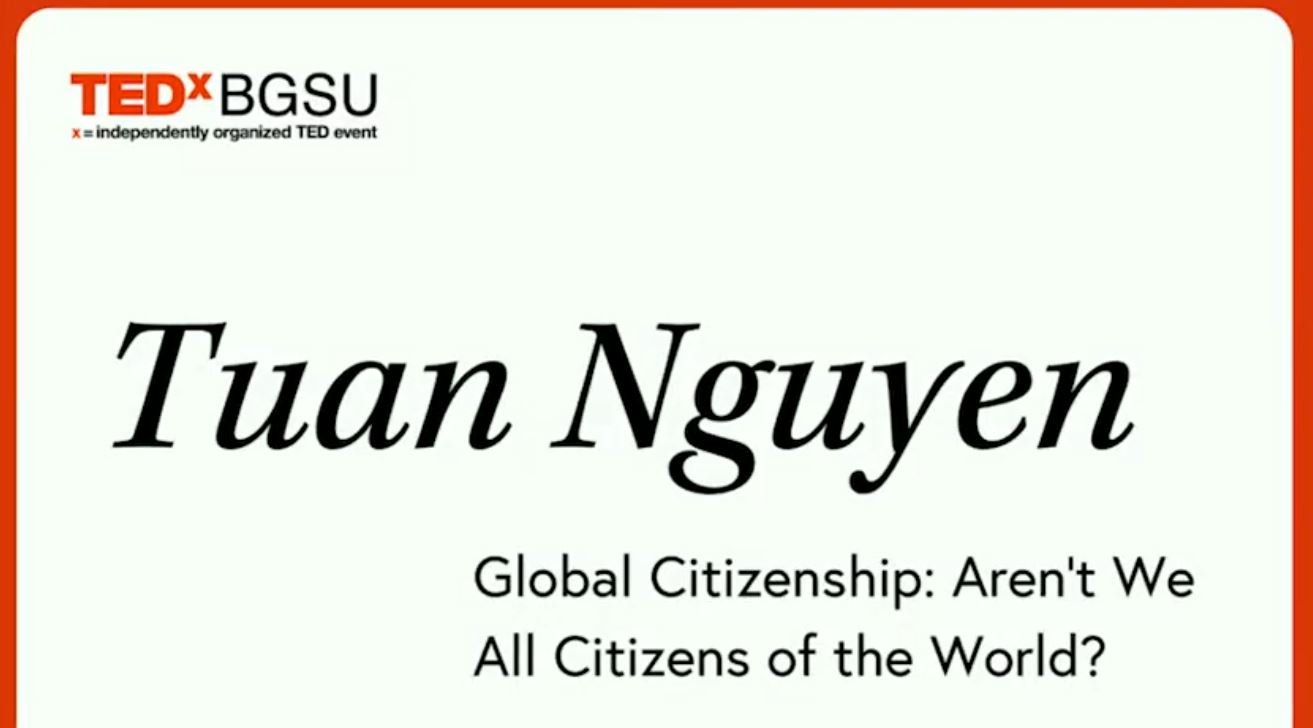
In this TEDx talk, Tuan Nguyen discusses the concept of global citizenship and its importance in an increasingly globalized world (0:23). He defines global citizenship as an individual's identity transcending political and geographical borders, embracing humanity as a broader class (0:56).
Key points from the talk include:
The Problem of In-Group Bias: Nguyen highlights that humans naturally favor their own group, which can lead to negative outcomes like discrimination (1:36). He argues that society needs more collaboration and compassion, suggesting that humanity should be considered as one's "in-group" (2:20).
Benefits of Global Mindedness: Adopting a global mindset leads to understanding the world and one's place in it, fostering great ideas and collaboration, and ultimately leading to better career, financial, and life outcomes (2:55).
Acculturation Approaches: Nguyen explains four approaches to acculturation:
Marginalization: No cultural or psychological contact with either traditional or larger society (3:30).
Separation: Maintaining ethnic identity without relating to the larger society (3:38). Nguyen shares his personal experience with separation when he first came to the U.S., which led to feelings of disconnection (4:06).
Assimilation: Giving up one's cultural identity to integrate into the larger society (3:48).
Integration: Retaining cultural integrity while becoming an integral part of the larger society (3:55). Nguyen emphasizes that shifting his mindset to be more open allowed him to feel more at home and connected without changing his core values (4:53).
Advice from Executives on Thriving in a Multicultural Environment: Based on advice from 25 executives, Nguyen shares insights on navigating multicultural environments:
Understand Interconnectedness: Recognize that events in one country can impact others (5:33).
Seek Understanding: Adopt Stephen Covey's principle of "seek first to understand rather than to be understood" by showing genuine interest in other cultures through thoughtful questions (6:00).
Be Adventurous: Embrace new experiences and gain a deep understanding of the culture and country to fully experience it (6:38).
Nguyen concludes by reiterating that the more global citizens there are, the better the world becomes (6:52), emphasizing that global citizens can connect better, think for the common good, and build a better society (7:14). Everyone has the capacity to become a global citizen, and more people need to be aware of this concept (7:20).
Title: Global Citizenship: Aren’t we all Citizens of the World?
Click here to begin Length: 7:32 minutes
-
In this TEDxYouth@AISR talk, Juan-Diego Estrada discusses the qualities that define a global citizen , emphasizing that it doesn't require any documents but rather an inner understanding and specific attributes (0:57-1:12).
He highlights three key qualities:
Curiosity (1:35): Estrada explains curiosity as the desire to know, learn, and care enough to understand. He illustrates this with the metaphor of knocking on a closed door to see what's on the other side, stressing the importance of a "beginner's mind" (1:40-2:06). He shares his personal experience of moving to Saudi Arabia, where initial alarming impressions were overcome by his determination to be curious and understand the local people and culture (2:22-3:32). His curiosity led him to find a language exchange partner, through whom he experienced Saudi culture, including a wedding, dancing, and learning about Islam (4:19-5:58).
Ability to see beyond judgmental minds (6:30): Estrada points out that our minds are constantly judging (6:40-7:08). He demonstrates, through a brief activity using hands to symbolize judgments, how these judgments can obstruct our ability to connect with others (7:26-8:13). By moving judgments aside, we can see clearly and develop wisdom (8:26-8:46).
Compassion (9:20): He concludes that when curiosity is present and judgments are set aside, the heart opens, leading to the realization that all people share fundamental desires for happiness and a meaningful life (9:02-9:17). This open heart fosters compassion, which is the willingness to go beyond oneself and contribute to an interconnected world (9:19-9:36).
Estrada concludes by reiterating that defining who you are comes from within, urging viewers to be curious, non-judgmental, and compassionate (9:41-9:53).
Title: Qualities of a Global Citizen.
Click here to begin Length: 9:59 minutes

-
In this TEDx talk, Sebastian Bell discusses the concept of global citizenship and its importance in today's world (1:07). He defines a global citizen as someone who understands how the world works, respects diversity, and is willing to act to make the world a more equitable and sustainable place (1:26-1:39).
Bell shares a personal anecdote about being in Nice, France, shortly before a terrorist attack (2:07-2:20). This experience profoundly affected him, making him realize that global events are real and impact everyone, emphasizing the interconnectedness of humanity (2:36-2:42). He suggests that embracing global citizenship is a solution to the world's problems (3:29-3:39).
He further illustrates global citizenship through the experiences of his friends, Christian and Daniel, who, despite their diverse backgrounds (Brazilian-Swedish and Russian-American, respectively), share core beliefs and embrace multiple cultures (4:00-5:11). Bell highlights the importance of conversation and understanding different life experiences as the first step towards embracing global citizenship (5:23-5:30).
Bell also discusses his own upbringing, having close ties to both England and Florida, and how his accent would "code-switch" depending on his environment (6:15-7:53). He uses this phenomenon of code-switching to demonstrate how easily individuals can adapt and assimilate different cultures and ways of behaving (7:54-8:02).
He concludes by referencing John Lennon's song "Imagine," particularly the verse "imagine there's no countries," to emphasize his core message: that while differences in origin make each person unique, these differences should be admired and shared, not fought over (8:32-9:43).
Title: Embracing Global Citizenship.
Click here to begin Length: 9:50 minutes